
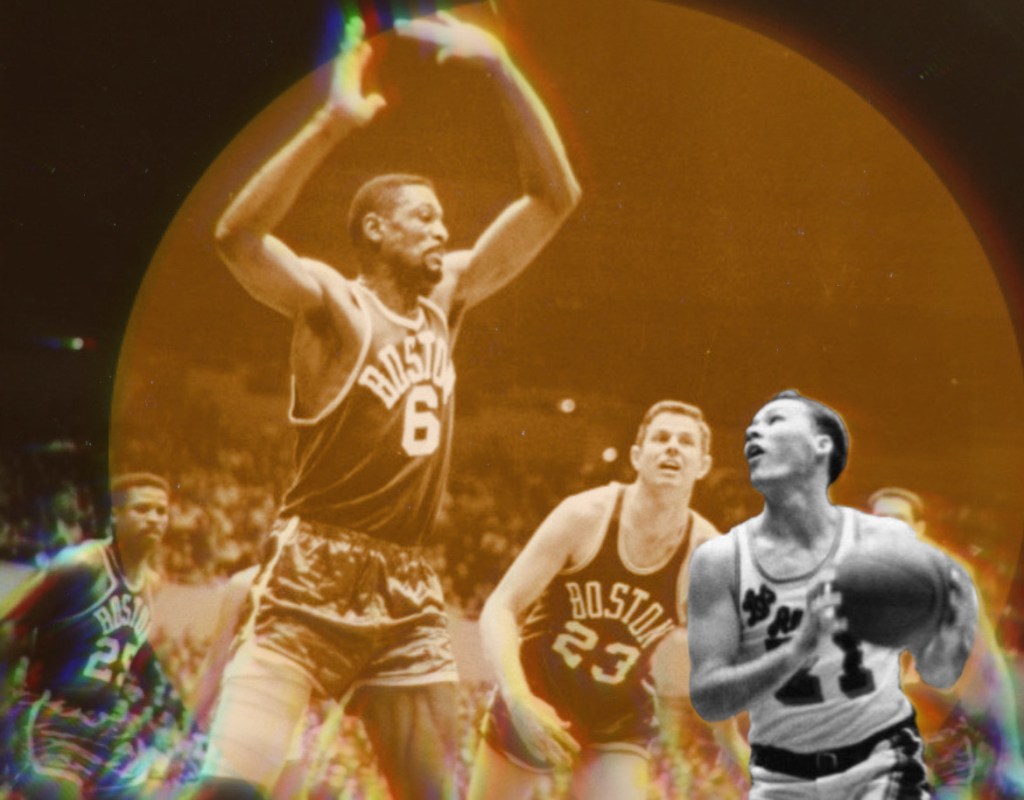
The 1963 NBA Draft was the 14th in league history following the BAA/NBL merger. Of the 13 men selected with the 13th pick prior to Jim King in 1963, three never played in the league, six played two seasons or fewer, and only two became All-Stars: Basketball Hall of Famers Hal Greer and K.C. Jones. The odds were stacked against King even before rookie training camp began, making his decision to even try out for the Lakers following his draft selection a difficult one. Nonetheless, King went on to appear in three consecutive NBA Finals, earned an All-Star selection, and enjoyed a long, 10-year career in the league. Ahead of his final season in 1972–73 with Chicago, only 18 players in the league had more seasons under their belts.
The following features the words of Mr. Jim King who was kind enough to discuss his NBA career with me over the phone. The audio of the conversation can be listened to in full below.
You were selected 13th in the 1963 Draft by a really great Lakers team that was just off a Finals loss. As a rookie joining that team with championship expectations, how challenging was that for you?
“It was a very challenging thing. In those days the Phillips 66ers was right outside of Tulsa. They had their own team and were the AAU champions. They had offered me a contract to come up there, and what you would do, you want to get paid for playing, so you got paid for working for Phillips 66. And I thought well, if I don’t make the pros I’ll come back here. He told me no, per NCAA rules if you try out for a pro team you are not eligible for any other amateur league. So I would’ve had to go to Europe, that put a little pressure on me. I had to decide if I thought I could make it or not, or I was through.”
“So I went to the GM and I said I want a no-cut contract and he said ‘we don’t give no-cut contracts’. I said okay, can you tell me what you want me to do and he said ‘well, I’ll tell you what, If you can get the ball and bring it down the floor against the other tough guards so Jerry West doesn’t have to, you may make the team. If you can cover the Sam Jones’s and the Oscar Robertson’s of the league so Jerry doesn’t have to, you’ve got a chance to make the team’ so I took the contract, $9,500 and a $500 check for a bonus, but I had to go out and make the team.”
“I go out there to a motel we have to go to in Inglewood and there was two lines. One guy across the line was 6’5 – 6’6. They drafted five but only wanted one. Hot Rod Hundley had retired and that was the only spot. They were looking for one guard. I asked him ‘are you here with the Lakers?’ and it was Roger Strickland who led the country in scoring two years in a row. They told me they didn’t need any shooters and their #1 pick was a shooter. Because of that I got a little disturbed and thought that I better go to my room and get out of here. I asked him ‘when did you get in?’ and he told me he had been here 30 days working out with the regular team. So my goal for the next morning was to get out there and get in the gym before everyone else. I got there at 8:30 and it didn’t start until 10.”
“We started practice right about 10 and it was hot. There was a smog alert and the smog just rolled in. They left the windows closed up above the bleachers. He announced to us we were gonna go 2 hours and he was a guy who ran a lot of drills. Other coaches just had you scrimmage. We’re in there and there’s eight guys and 15 minutes into practice they pull open the windows and the smog like clouds just starts rolling in, you couldn’t get a deep breath. It was awful. 15 minutes into practice the coach, Fred Schaus, says something to Strickland and Roger snaps back at him. Coach Schaus said ‘son, there’s the door. Put your stuff up, you’re through’ .”
“After that first hour coach called for a break and there was six other guys left. They all were in a circle around him and every one of them laid down on the floor. My high school and college coaches wouldn’t even let me sit at practice. So I just couldn’t do that. I grabbed the ball and ran to the other end of the floor and worked five minutes on my ball handling, shot some free throws, and just stayed with it.”
“Three to four days later they kept eliminating people and finally at the end of the week it was just me and another guy from a small college. I could tell he could shoot but couldn’t handle the ball so I felt real good about it. We went to exhibition for a week and I got to play with all the guys. That’s where they started playing Jerry and Elgin. We came back and the coach told me that they’re pretty happy with how I looked and he thought that I could help them. He said ‘I guess you know when I made our team’ and pulled his glasses down. He asked ‘do you remember that first day of practice when we had that smog alert and you were the only one who stayed on your feet and went down to work on ball handling? Your friend Jerry West was sitting next to me and told me there is only one guy here who can make us better and it’s that kid right there’.”
65′ and 66′ rolls around and you guys made the Finals two straight years. In 66′ you go down 3-1 just to come back and force a Game 7. Can you talk a little about how tough that series was and how tough those losses were for Jerry and the team in general and yourself?
“Oh man. We couldn’t beat Boston during the regular season usually. The press every year would say it’s the Lakers year because the average age of the Boston Celtics was now 34, 35, 37, and we’re coming in behind them now. But oh my gosh, those losses just hurt Jerry so much. He was so competitive and took the pressure off of everything and I just loved him, I loved who he was.”
“In Boston it was extremely, extremely loud. I would walk up to somebody and yell at them and they couldn’t hear a word I said. You could feel the decibels bounce off your ear. It was hard, it was hard to play like that. The fans were awesome, the team was great, they thought they could beat us and it was hard to turn. We had a couple chances but it just didn’t get any easier. Jerry just took every defeat really personal.”
After 66′ you ended up on the Warriors after being picked up by the expansion Bulls and had a good season averaging 11-4-5. Warriors went 6-2 against the Lakers in the regular season and you eventually swept them with West injured. Can you talk about that season and how you felt going against your former Laker teammates, specifically in the playoffs?
“Bill Sharman said he needed another couple of guards so for Guy Rodgers he got Jeff Mullins and myself and that was a good deal for both of us.”
“Jerry and I were really good friends and I had just moved weeks before and had received a Christmas card from him with a really nice letter. We just had a really nice connection. He’s a country boy and I was raised on a farm. We were competitive, we knew we were gonna play hard against each other but I didn’t like to play against him. He was incredible when he needed two points.”
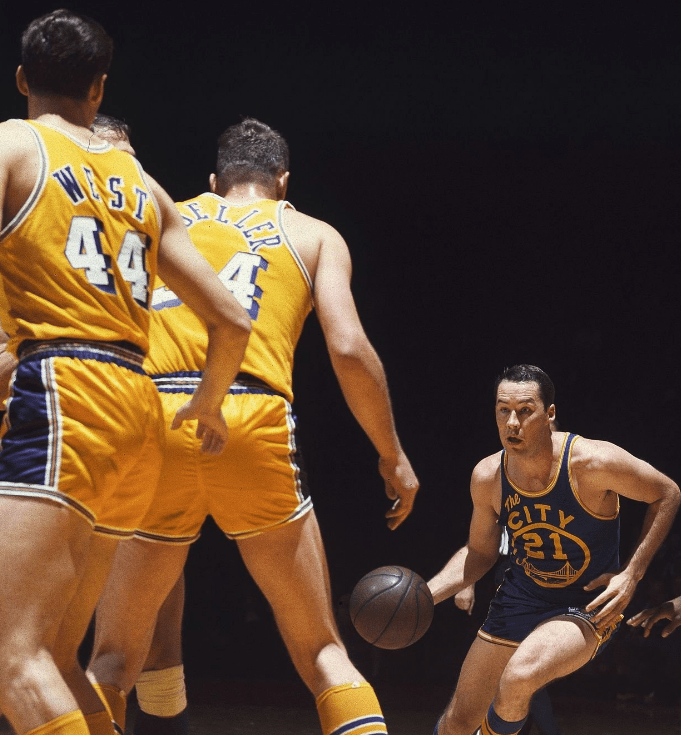
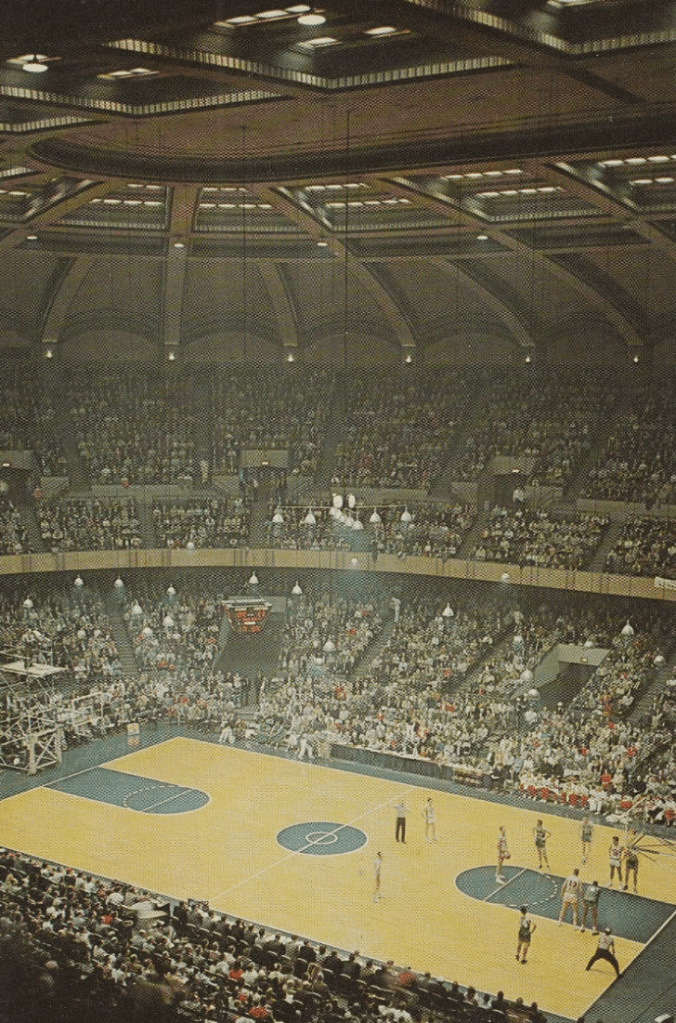
“The Lakers were obviously good. Jerry and Elgin, Rudy LaRusso, Frank Selvy, we had some good old guys and they knew how to work and play and they were a good bunch of people. Clean cut guys. In San Francisco we had the same thing, Rick Barry was there, he added a flavor to it but nobody liked him. In that playoffs we had to play St. Louis and a week or two before he did a big commercial with Snickers for when they made the bars a little big bigger than they used to. Kiel Auditorium in St. Louis where they played was an Opera house. It had four to five levels of balcony. People at the top, every time we went to a huddle would try to hit Rick with a Snicker. They’d hit the floor and go ‘bam!’ and Bill Sharman told Rick, who nobody liked, ‘I want you to go to the other end of the court. There is no reason for all of us to get killed’. We were telling Rick to go down to the other end, we couldn’t afford to get everybody hurt. That was kind of a crazy thing, that was kind of a pleasure because we kind of wanted to do something for him anyway. Rick was the worst, but a great, great player.”
“We also had Thurmond who was next to Russell in blocking shots. I remember the first game I played with him I sagged off and they threw my guy the ball and he shot it from the corner. I ran after him and all I heard was ‘bam!’ and Nate had reached all the way over me and blocked his shot. He was like an aircraft carrier.”
That year you made the Finals for your 3rd straight year except instead of the Celtics and Russell and it’s the 76ers and the other titan of the era, Wilt Chamberlain. You had a fantastic series averaging 18-8-5 in a much larger scoring role than you were used to in LA. What was that series like for your personally?”
“That Sixers team when we faced Wilt was loaded. Hal Greer, Wali Jones, who was a wild, crazy player. He would try to cover Jerry West and Jerry would kind of laugh at him and Wali would get all pumped up but couldn’t stay with him at all.”
“That year with Hannum we played the Sixers a few times in the regular season and when we went to Philly to play them Wilt had 28 straight made FG’s, most of them were probably stuffs, but he didn’t take a single shot because he knew Nate could block him. He wasn’t about to let Nate break his streak. That was Wilt.”
“I was just thrilled to try to win that thing. When I started with the Lakers if I took a shot and missed it the coach would call a timeout and tell me to get the ball to shooters, but I could play both ways. In college I led our team in scoring and when I was on the Lakers he wanted Jerry to be Jerry every single time. I had a bad habit of jumping up in the air at the free throw line and looking for somebody to pass to and Sharman had told me to quit doing that. When you go up in the air, go up to shoot. After that I started shooting better. When I started showing myself as a shooter it went a long way.”
Do you recall how some of the veterans on the team felt about going up against Wilt? Specifically Tom Meschery or Al Attles who both were teammates of his with the Warriors?
“Al Attles was with Wilt when he had 100 points. He told me that he had one of his best games that game and said ‘I had 21 points but they cant foul Wilt so they would foul me and make me shoot free throws instead’.”
“Meschery was the mad Russian. He would get in fights with several guys and would get hit twice before he knew he was hit. I loved him, he played with his heart. He and Wilt and Al too were all very happy. They would talk about Wilt some and would tell stories about him. Al was really fast. He was probably the fastest in the league. We were getting ready to practice one day and someone had asked who the fastest guy in the league was. Somebody said Al guaranteed and Wilt was sitting there and said ‘what are you talking about? I can outrun Al’ and everybody laughed. They bet twenty dollars he couldn’t outrun Al. Wilt said ‘Okay, get your money out. I’ll let Al start at the free throw line and I’ll start at the baseline. We’ll run to the other baseline, come back, and I’ll beat him by fifteen feet.’ And he did beat Al by almost fifteen feet. Nobody knew Wilt could run because he never did run in the game, Wilt would come running right towards me and wouldn’t even try to avoid me. He would say ‘Move King!’ and push me out of the way. He was a likeable guy and an incredible athlete. No doubt about it.”
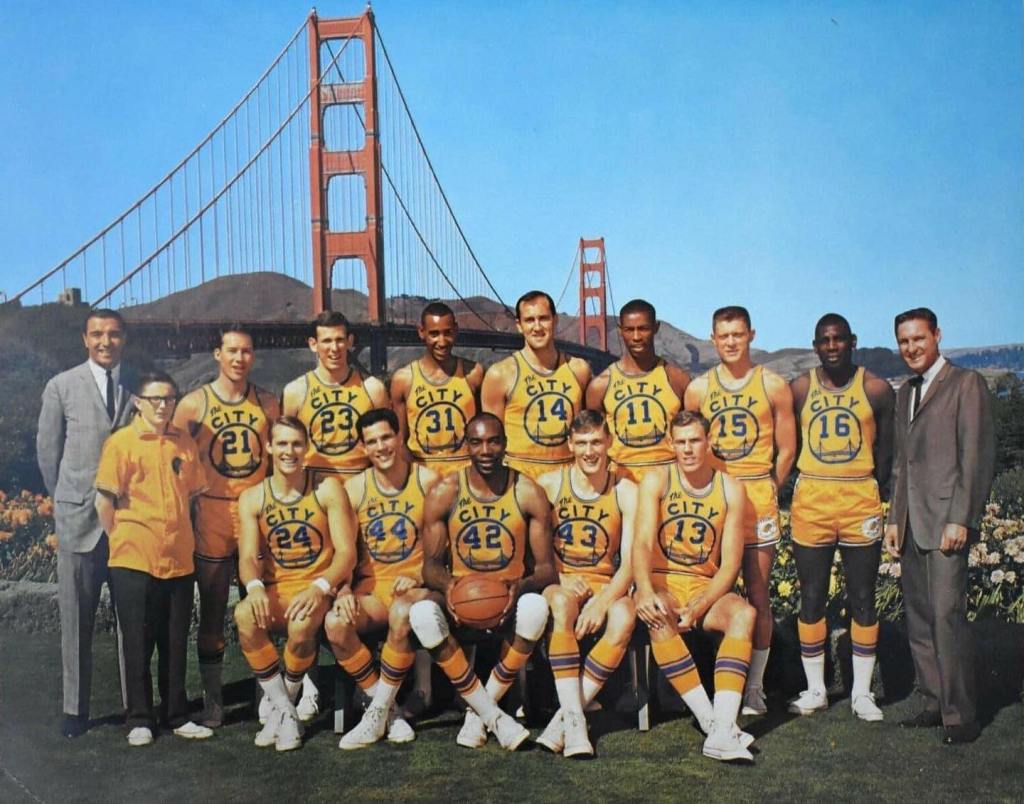
Following the Finals loss in the offseason Rick Barry decided to sign with the ABA. What was your initial reaction when you heard the news and did it catch the team off guard?
“I wasn’t too shocked by it. Rick was looking out for himself. We put up with Rick. We had great guys on the team, good people. Jeff Mullins, nobody wanted to fight or argue with him. The owner of the Oaks was Pat Boone and he hired Ricks coach from college, and Rick had married the coach’s daughter already. I figured they were doing that to try to get Rick over there.”
With Barry gone you had to step up offensively and really take a larger role, and it paid off with an All-Star selection. What was that season like and what did that recognition mean for you?
“Without Barry they said we all had to pick it up. It was a good feeling, but I wasn’t playing for Sharman anymore who quit after that year. I would’ve loved to play for him more.”
“The first part of the season I was averaging 25-30 points the first couple of months. I was leading the league, and it was just glorious, it was so fun. And then I had an injury on my tailbone that they just couldn’t figure out. I went home that summer and I would go seven or eight minutes and I couldn’t even walk off the court.”
A few games into the 69′ season you were traded from the Warriors to Cincinnati for Jerry Lucas. What was that transition like and how was it being coached by Bob Cousy?”
“It was miserable there. I got traded for Jerry Lucas and that was not popular in Ohio since he is from there. Oscar called Lucas a ‘horse raider’, he did not like him and he wanted to be traded. That’s the only team that I went to that didn’t make the playoffs.”
“Sharman and Cousy were totally opposite. Cousy was not a communicator at all. He would come in at halftime, sit down, hold his hands to his face and his tears would be hitting the floor. Oscar was the main one. Oscar wouldn’t do anything Cousy wanted him to do and he knew it was going to be a tough year. I went in there and my second game there I got in and played quite a bit and had a collision with Dick Snyder at the basket. He hit me, knocked me sideways, and I landed on my side. Cracked my ribs and I was out for eight weeks, that almost was my whole year.”
“I was injured and we had Odie Smith, Oscar, and a couple other guys and Cousy decided the team needed him and his ball handling. He suited up for a game in Cleveland and we had a six point lead. I was at home watching, they stole the ball from him three times and we went into overtime. They just physically took it away from him. He thought he could just go out and play how he used to and it didn’t work and Oscar laughed about it.”
Jim King played his final three seasons with Chicago before retiring in 1973 to become a coach.
“Once I decided to retire in Chicago, Boston offered me but I had already told Athletes in Action I would take that coaching job and I was ready to get out of the league. But I would’ve loved to play for Boston because I was always the fastest guy on the floor.”
Audio of the full conversation with Jim King:

 The Hooper Holler
Leave a comment